
Institut de Biologia Evolutiva - CSIC UPF
A marine unicellular organism reveals that the ability to aggregate may have been key to the origin of animals
A marine unicellular organism reveals that the ability to aggregate may have been key to the origin of animals
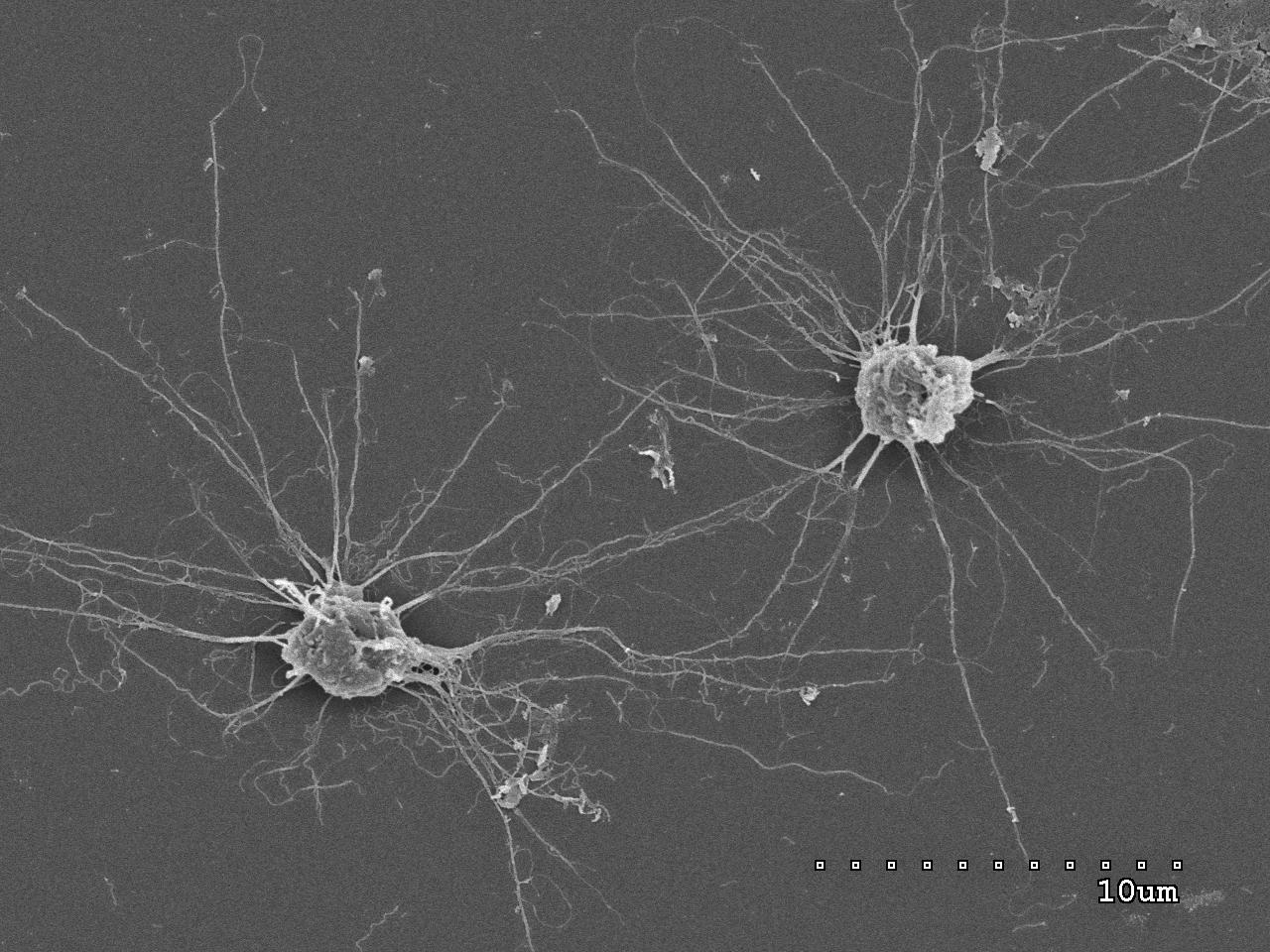
Animal evolution is often represented as a large phylogenetic tree connecting all living species and narrowing down toward the earliest ancestors of each lineage. Yet we have never identified the first ancestor of the animal kingdom: the unicellular organism that, at some point in evolution, gave rise to multicellular life forms. This fundamental mystery in evolutionary biology remains unresolved, but we may now be one step closer to understanding it.
A new international study co-led by the Institute of Evolutionary Biology (IBE), a joint centre of the Spanish National Research Council (CSIC) and Pompeu Fabra University (UPF), together with Indiana University Bloomington (USA), provides new insights into this evolutionary transition and highlights cellular aggregation as one of the mechanisms that may have contributed to the origin of animal multicellularity.
Published in Nature, the study shows that Ministeria vibrans, a small marine unicellular organism and one of the closest living relatives of animals, forms stable multicellular aggregates when exposed to the marine bacterium Thalassospira lucentensis. During this process, the microorganism coordinately activates hundreds of genes involved in cell adhesion, intercellular signaling and developmental regulation, many of which are considered essential for the organization of animal tissues.
Cellular aggregation may have been a key step toward animal multicellularity
Until now, scientists have debated whether the ancestor of animals began forming organized bodies through incomplete cell division of a single cell (clonal development) or through the aggregation of independent cells. The clonal hypothesis has traditionally dominated because aggregation poses theoretical challenges—for example, it could be vulnerable to “cheater” cells that benefit from the group without contributing to it.
However, the team observed that in the presence of T. lucentensis, M. vibrans cells initiate a rapid, coordinated and highly reproducible aggregation process.
Through retractable connections in their filopodia (tentacle-like cellular projections) individual cells massively assemble into stable three-dimensional structures that persist for more than two months.
“We observed that one of the unicellular relatives of animals possesses the genetic toolkit needed to form stable aggregates, and this forces us to rethink the history of multicellularity,” says Iñaki Ruiz-Trillo, principal investigator at IBE and ICREA researcher who co-led the study.
Key genes for animal tissues were already active before the origin of animals
Among the genes activated by M. vibrans, the study highlights mechanisms that play essential roles in embryonic development and in the formation of animal tissues and organs. During aggregation, the protist activates genes encoding or associated with cell adhesion molecules such as cadherins, extracellular matrix components such as collagen, and elements of major signaling pathways including Hippo and Notch, which are crucial in animals for coordinating growth, cell communication and tissue organization.
A detailed transcriptomic analysis also revealed a temporal pattern: before aggregation, cells reduce the expression of genes associated with basal metabolism, allowing them to conserve energy. During the early stages of aggregation, genes involved in food capture and environmental response become activated. Later, in more developed aggregates, the expression of genes linked to cell migration, tissue remodeling and programmed cell death increases, processes that are fundamental for the organization of complex multicellular organisms.
“When we analyzed the genetic data and saw the coordinated activation of cadherins and the Hippo pathway, we were fascinated. These microbes do not simply carry these genes in their DNA as disconnected parts—they know exactly when and how to switch them on to transition from solitary individuals into a coordinated unit. This shows that the genetic tools required to build an animal were already in place long before the first animal appeared on Earth,” explains Iñaki Ruiz-Trillo, principal investigator of the Multicellgenome Lab at IBE.
Group living may have favored feeding and reproduction
The research team proposes two main evolutionary drivers behind this cooperative behavior: optimized feeding and sexual reproduction. Cells integrated within aggregates grew more efficiently than cells obtained from experimentally disrupted aggregates. However, the team notes that stress caused by experimental manipulation may also have affected the growth of the latter.
Additionally, electron microscopy images show that aggregates retain bacteria and bacterial biofilms in the spaces between cells, creating a potential food reservoir.
The study also detected strong activation of genes associated with meiosis, a type of cell division linked to sexual reproduction, during early aggregation stages, suggesting that these cellular communities may facilitate genetic exchange and mating.
“This study shows that reversible cellular aggregation was not an evolutionary dead end, but rather a highly effective adaptive strategy under changing environmental conditions. This flexibility may have pre-adapted pre-animal lineages for permanent cellular integration,” explains Iñaki Ruiz-Trillo.
The authors note that laboratory conditions cannot fully replicate the ecological pressures of the open ocean. Nevertheless, the study opens the door to future research into cellular aggregation mechanisms in protists that may help answer one of the major questions in evolutionary biology: what our unicellular ancestor looked like.
This research project has been transparently funded through public grants from the U.S. National Institutes of Health (NIH), the Swedish Research Council, and the European Research Council (ERC, MISSINGRELATIVES project).
Referenced article:
Li, R., Dharamshi, J.E., Kwok, K. et al. A unicellular relative links aggregative multicellularity to animal origins. Nature (2026). https://doi.org/10.1038/s41586-026-10748-5