
Institut de Biologia Evolutiva - CSIC UPF
European Homo sapiens ate fewer insects than Neanderthals and tropical populations
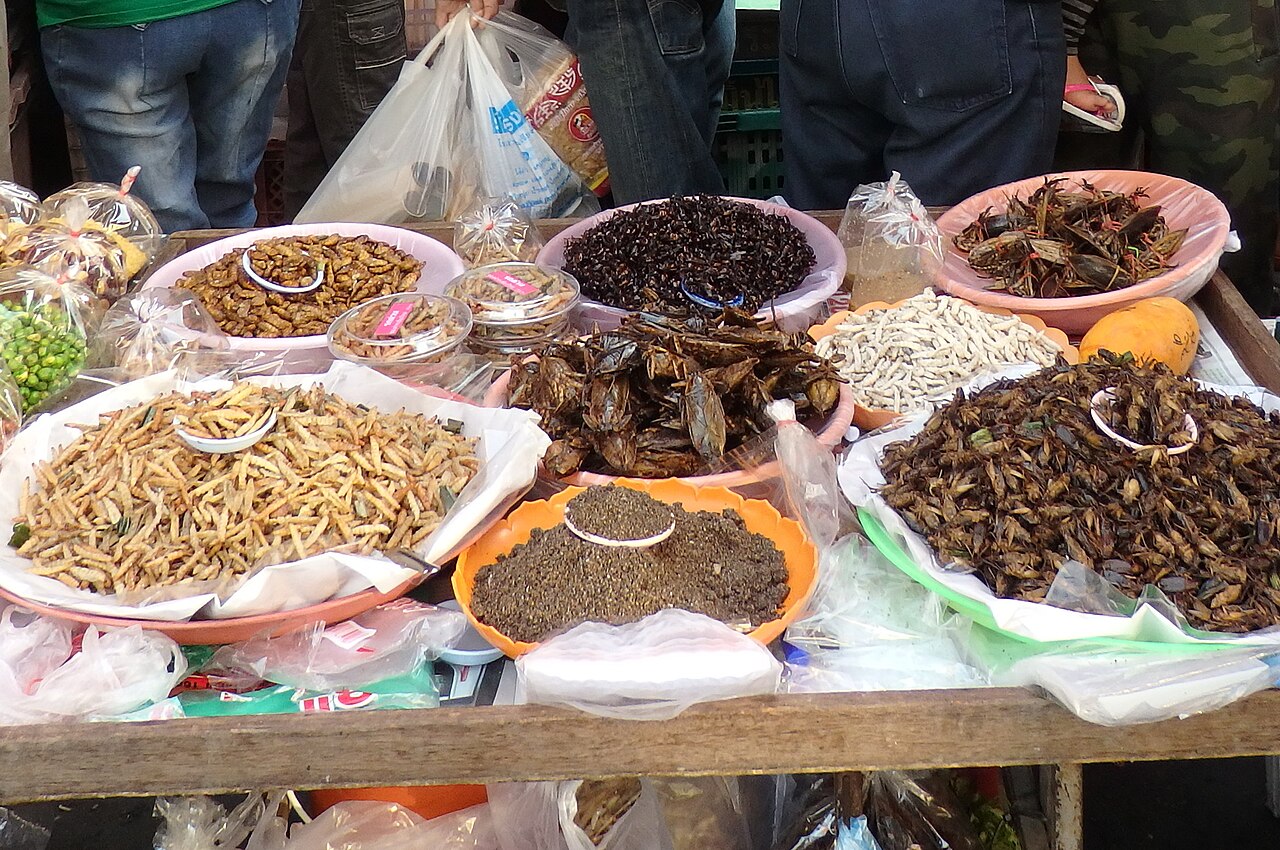
A study by the Institute of Evolutionary Biology (IBE), a joint centre of the Spanish National Research Council (CSIC) and Pompeu Fabra University (UPF), uses genomic analyses to reconstruct insect consumption from 9,000 to more than 102,000 years ago. Published in Science Advances, the research suggests that insect consumption was sporadic and incidental in Europe, Central Asia and East Asia, while it may have been more common in tropical regions and, above all, among Neanderthal populations. The findings shed light on human evolution, ecology and present-day insect consumption.
Anatomically modern humans, or Homo sapiens, arrived in Europe at least 46,000 years ago. To look for evidence of insect consumption, the IBE team analysed 745 samples of dental calculus from individuals dating back up to 33,000 years. Dental calculus preserves traces of DNA from species regularly consumed as part of the diet. The dental analyses suggest that modern humans in northern Eurasia did not practise entomophagy on a regular basis. In addition, the insect species identified in the dental calculus of Homo sapiens point to incidental ingestion, through the consumption of water or contaminated food.
The team also studied human genes involved in the digestion of chitin, a complex carbohydrate — or polysaccharide — that makes up the exoskeleton of insects. In human populations from northern Eurasia, chitinase genes — which produce an enzyme found in the stomach that breaks down chitin — carry mutations associated with a reduced ability to digest insect exoskeletons. This trait has persisted for the past 9,000 years, since the arrival of agriculture.
“The scarce presence of insects in the diet of northern Eurasian populations suggests that the absence of entomophagy is not only due to recent cultural factors, but also reflects a long ecological and evolutionary history,” says Pablo Librado, principal investigator at the IBE, who led the study.
Insects in the Neanderthal diet
Neanderthals inhabited Eurasia from around 400,000 years ago until their disappearance approximately 40,000 years ago. Despite occupying the same environment as Homo sapiens and coexisting with them for a brief period, the analysis of 18 Neanderthal dental calculus samples showed a greater presence of insect DNA than that found in anatomically modern humans. This abundance in Neanderthals was comparable to that observed in western chimpanzees, which use entomophagy as a dietary supplement in the savannah, especially during periods of drought. By comparison, gorillas were the study group with the highest presence of insect DNA in their dental calculus, due to the incidental ingestion of numerous insects associated with the foliage that forms part of their diet.

Domestic honeybee (Apis mellifera). Bees are among the insects traditionally domesticated in various human cultures.
Credit: Juan Manuel Calvo Martin.
The most abundant DNA remains in Neanderthal dental calculus correspond to dipterans, the group of insects that includes flies and mosquitoes, with mosquitoes being particularly prominent. The results support a recent hypothesis suggesting the regular consumption of animal carcasses infested with fly larvae. “The abundance of mosquito remains reinforces the possibility that the carcasses of their prey remained in ponds and marshy areas, ideal environments for insects to lay their eggs,” explains Librado.
The study also revealed that Neanderthals carried variants of the chitinase gene that facilitated insect digestion. This trait was also identified in the only Denisovan specimen analysed, belonging to an archaic human lineage first identified in Denisova Cave, Siberia.
The genetic footprint of entomophagy in the tropics
The team analysed genes linked to the digestion of chitin from insect exoskeletons. These genes are responsible for producing in the stomach the chemical “scissors” that break down chitin: the enzymes acidic chitinase and chitobiase. In both ancient and present-day samples, the study identified genetic variants associated with higher expression of these enzymes in populations living near the tropics.
“Large quantities of insects need to be consumed to compensate for the high caloric cost involved in collecting them. In the tropics, social insects such as termites and ants are more readily available: their biomass and diversity allow for sustainable exploitation throughout the year, while also contributing to pest control,” explains Manuel Piñero, predoctoral researcher at the IBE and first author of the study.
Expression of these enzymes gradually decreases as populations move towards higher latitudes. This latitudinal genetic variation, maintained for at least 9,000 years, reflects the abandonment of entomophagy in European populations.
The future of entomophagy in Europe
Human population growth, together with the climate crisis, environmental pressure and current patterns of production and consumption, has driven the search for alternative food sources in recent years. With 1,611 insect species catalogued as edible, organisations such as the Food and Agriculture Organization of the United Nations (FAO) have proposed insects as a sustainable food source. However, despite the fact that hundreds of millions of people already consume them, Western societies continue to show an aversion to entomophagy. Although this rejection may have a cultural basis, its origin remains unknown.

Manuel Piñero, predoctoral researcher in the Ancient Population Genomics group at the IBE, displays live beetles (Tenebrio molitor) and preserved specimens from the Museu de Ciències Naturals de Barcelona, used in the group’s research.
“Beyond cultural or religious factors, our results suggest that the low availability of insects outside the tropics may have been a key factor in the abandonment of entomophagy, leading to a reduced ability to digest insect exoskeletons,” says Librado. Today, however, industrial processing makes it possible to harness their nutritional properties without the need to digest this component, while also enabling large-scale production on edible-insect farms.
The Ancient Population Genomics research group, led by Pablo Librado at the IBE, studies the process of domestication, mainly using insects as model species. To do so, the researchers compare the genomes of insect species recently approved for human consumption with those of specimens obtained from entomological collections.
“We study the evolution of domestication in animals, which can also provide insights to improve the exploitation of insects for consumption, both as livestock feed and as food for humans,” concludes Librado.
Reference article: Piñero, M., & Librado, P. (2026). Genomic evidence for limited entomophagy in ancient Europeans. Science Advances. DOI:10.1126/sciadv.aec6939