
Descoberta la biofluorescència de la salamandra: una nova llum sobre un clàssic de la natura
Descoberta la biofluorescència de la salamandra: una nova llum sobre un clàssic de la natura
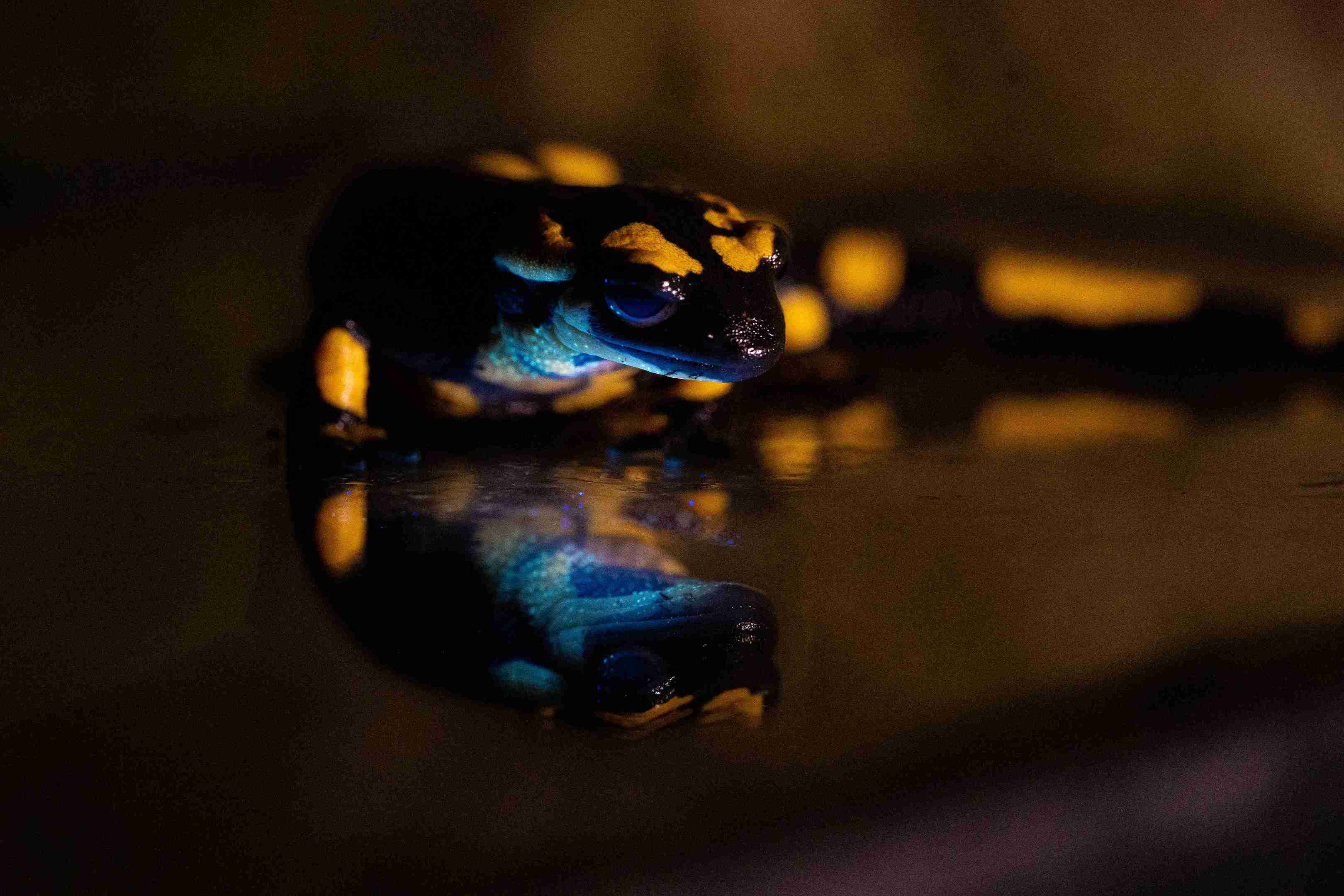
La salamandra és un animal àmpliament conegut a Europa, fàcilment identificable pels seus inconfusibles colors negre i groc, i per les secrecions tòxiques que utilitza com a mecanisme de defensa. Malauradament, es veu afectada per la degradació i fragmentació dels seus hàbitats, i la Unió Internacional per a la Conservació de la Natura (UICN) l’ha catalogat com a “vulnerable” a la seva Llista Vermella d'Espècies Amenaçades. A Catalunya, habita sobretot en boscos humits, rierols i zones de muntanya.
L’estudi, publicat avui, revela que, sota llum ultraviolada, la salamandra mostra uns patrons fluorescents distintius. Concretament, emet una resplendor turquesa a la part ventral i als laterals, coincidint amb la distribució de les seves glàndules cutànies i de les seves secrecions verinoses.
L’equip també va descobrir que els compostos presents a la sang i a les glàndules granulars de la salamandra també brillen, fet que suggereix una distribució sistèmica de molècules fluorescents, una característica poc habitual coneguda anteriorment només en les granotes arborícoles.
Tot i que la rellevància ecològica d’aquest fenomen continua sent incerta, la resplendor fluorescent podria tenir una funció comunicativa i estar relacionada amb el festeig, la migració o l’advertiment davant dels depredadors.
Un amfibi que brilla a la nit
L’estudi revela que aquesta biofluorescència es concentra principalment a la zona groguenca del ventre de la salamandra i als laterals del cos. Concretament, està localitzada a les glàndules de la pell i a les secrecions que aquestes produeixen, les quals mantenen la seva capacitat fluorescent durant més de 24 hores després de ser alliberades.
“És fascinant que una espècie tan estudiada encara contingui fenòmens desconeguts com aquest. Ens recorda que fins i tot els organismes més familiars poden amagar secrets que només es revelen quan s’observen amb noves eines”, comenta Bernat Burriel, investigador del Museu i primer autor del treball.
Quan rep llum ultraviolada —imperceptible per a l'ull humà—, les substàncies químiques presents a la pell de la salamandra transformen la radiació i la tornen a emetre a l'espectre visible, en tons verds i blaus. Aquest fenomen, anomenat biofluorescència, es diferencia de la bioluminescència perquè depèn d'una font de llum externa. En canvi, els organismes com les cuques de llum generen la seva pròpia llum mitjançant reaccions químiques.
Durant anys, la biofluorescència es va considerar limitada als entorns marins, amb la rara excepció dels escorpins. Tanmateix, una sèrie de descobriments recents han demostrat que també és comú en diversos animals d’ambients terrestres, incloent-hi rèptils, ocells i amfibis.
Quina és la funció de la biofluorescència i quina substància la causa?
Els resultats indiquen que la biofluorescència pot tenir funcions ecològiques rellevants. Per exemple, podria facilitar la comunicació entre individus, influir en la selecció de la parella o reforçar els senyals d’alerta contra depredadors. Tot i així, el seu paper exacte en les salamandres encara planteja interrogants.
“La fluorescència compleix diversos criteris que suggereixen una funció comunicativa. Podria ajudar les salamandres a detectar-se mútuament en contextos nocturns o entorns molt densos”, diu Martin Kaltenpoth, director del Departament de Simbiosi d'Insectes de l'Institut Max Planck d'Ecologia Química i coautor de l'estudi. Alhora, el fet que es trobi en les secrecions tòxiques també dona suport a la hipòtesi sobre el seu rol en les interaccions amb altres espècies.
Malgrat que els humans només poden observar aquesta fluorescència amb l’ajuda d’una làmpada UV, alguns animals tenen una visió prou sensible per percebre-la fins i tot a baixes intensitats. De fet, durant la nit, l’única il·luminació que arriba al sòl dels boscos on viuen les salamandres prové de les estrelles i la Lluna. Aquesta llum conté una proporció relativament més alta de longituds d’ona UV que la llum diürna, un fet que podria afavorir la percepció d’aquesta fluorescència i ajudar les salamandres a reconèixer-se millor entre elles.
Així mateix, la fluorescència de la salamandra també podria formar part d’una estratègia de senyalització aposemàtica, és a dir, una estratègia basada en l’ús de colors cridaners per dissuadir els depredadors i advertir-los de la seva toxicitat.
En el cas de les salamandres, aquest vincle ja es va establir fa més d’un segle amb el descobriment de les samandarines, un grup d’alcaloides esteroides altament tòxics derivats de precursors del colesterol. En aquest context, la fluorescència podria reforçar el senyal d’advertència ja produïda pels seus colors groc i negre.
“La troballa d’aquest fenomen ha estat sorprenent, ja que les secrecions de les salamandres s’han estudiat químicament durant dècades i no hi havia constància de cap informe publicat sobre fluorescència”, explica Andrés Brunetti, investigador de l’Institut Max Planck d’Ecologia Química i coautor de l’estudi.
“Encara no sabem quin és el compost responsable d'aquesta fluorescència, però tot indica que és una molècula desconeguda en aquesta espècie. Identificar-la serà clau per entendre el seu origen i funció”, afegeix Salvador Carranza, investigador de l'IBE (CSIC-UPF) i també coautor de l'estudi. Per aquesta raó, els investigadors estan actualment en procés de caracteritzar químicament els compostos candidats.
Implicacions per a la recerca i la conservació
El descobriment amplia el coneixement sobre la biologia dels amfibis, posa de manifest la importància d'estudiar els organismes des de noves perspectives i pot tenir implicacions per a la seva conservació, ja que una millor comprensió dels mecanismes de comunicació i comportament pot ajudar a protegir les espècies vulnerables.
Aquest estudi, en què també han participat investigadors de l'Institut de Biologia Subtropical i de la Societat Catalana d'Herpetologia, forma part d'un projecte pioner de conservació d'amfibis a Catalunya finançat per la Fundació del Zoo de Barcelona.
Article referenciat:
Burriel-Carranza, B.; Brunetti, A. E.; Skamnelou, M.; Escudero, J.; Estarellas, M.; Tulloch, S; Riaño, G.; Rivera, X.; Piulachs, M.-D.; Engl, T.; Weiss, B.; Kaltenpoth, M.; Carranza, S. (2026). Glandular biofluorescence in fire salamanders (Salamandra salamandra): first evidence and ecological implications. Royal Society Open Science, 13: 251991. https://doi.org/10.1098/rsos.251991