
Butterflies migrate in opposite directions depending on the hemisphere
Butterflies migrate in opposite directions depending on the hemisphere
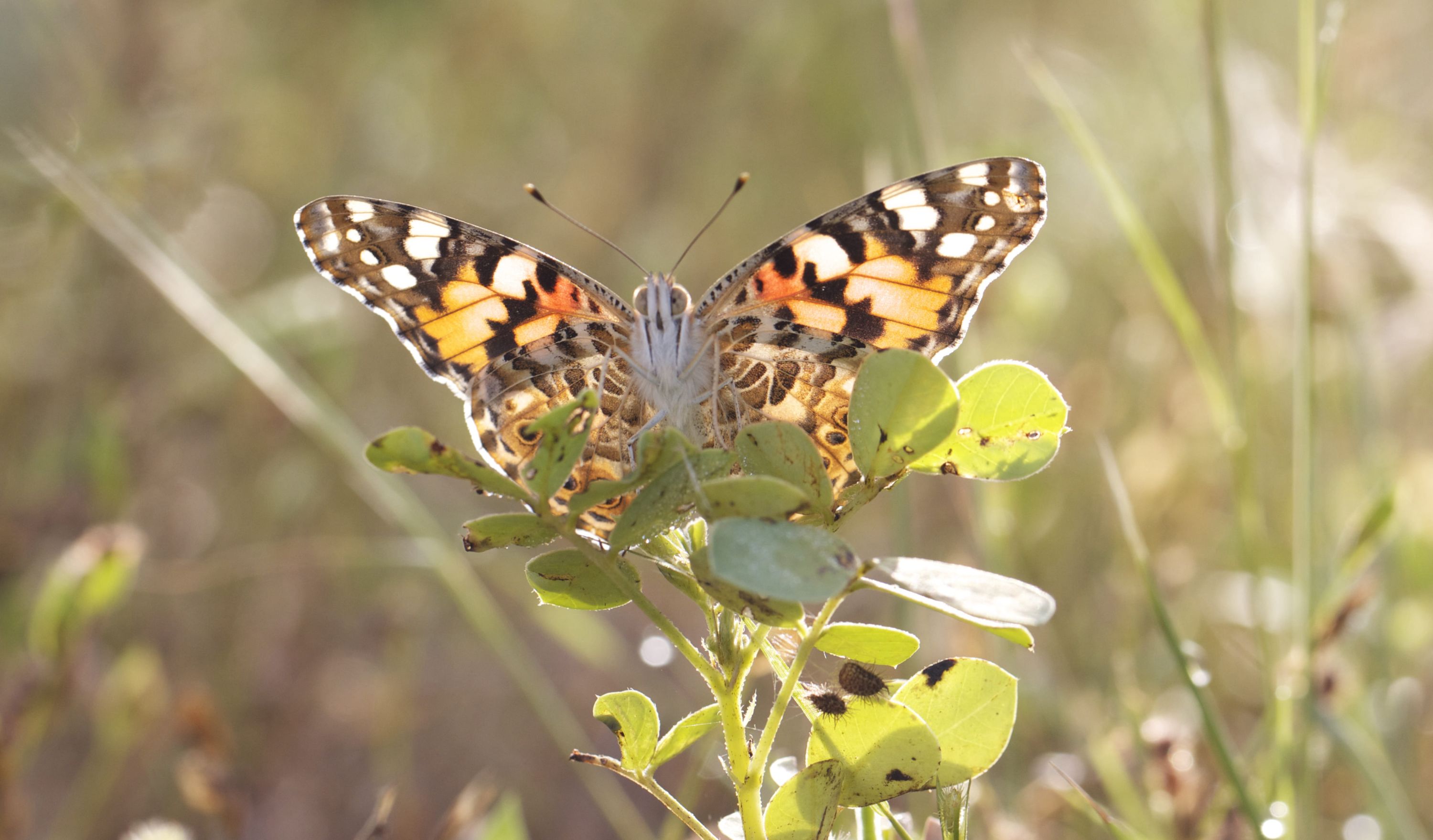
An international team led by the Botanical Institute of Barcelona (IBB, CSIC-CMCNB), together with the Institute of Evolutionary Biology (IBE: CSIC-UPF) and collaborators from Africa, Europe, and the United States, has discovered that painted lady butterflies (Vanessa cardui) carry out opposite migrations in each hemisphere of the Earth. While populations in the Northern Hemisphere fly south during the boreal autumn (between September and December), those in the Southern Hemisphere move in the opposite direction during the austral autumn (between March and June), following their respective seasons.
This surprising pattern, unprecedented in insects, has a genetic basis associated with a chromosomal inversion, as demonstrated by a study published in Nature Communications.
The finding represents the first documented case of a “migratory divide” in insects, a phenomenon well known in birds, but until now never confirmed in these animals. In such divides, populations of the same species develop distinct migratory strategies, which can lead to isolation and, eventually, the formation of new species.
Two Hemispheres, Two Migrations
In previous studies, the same group had shown that Vanessa cardui undertakes the longest migrations known in butterflies, covering a circuit of up to 15,000 kilometers between equatorial Africa and Europe. Now, the team has identified a new migratory circuit in southern Africa, completely independent of the route followed in the Northern Hemisphere.
The researchers traveled across the African continent in search of the painted lady butterfly and analyzed the DNA of more than 300 specimens from 38 countries in Africa and Europe. Genomic analyses revealed a large inverted fragment of DNA—a chromosomal inversion—on chromosome 8. This region, which differs between individuals from each hemisphere, contains genes related to migratory behavior.
The research, which includes the participation of Roger Vila, principal investigator at the IBE (CSIC-UPF), reports that southern populations do not cross the equator but instead follow their own cycle adapted to the seasonality of the Southern Hemisphere.
The chromosomal inversion contains a receptor for the neurotransmitter GABA-B, which is involved in orientation during flight. The results highlight a key point in the genetic basis of navigation.
The team proposes that this chromosomal inversion modifies how butterflies interpret environmental signals.
In the Northern Hemisphere, Vanessa cardui populations move south during the boreal autumn, whereas in the Southern Hemisphere they fly north during the austral autumn. These opposite routes align with the reversed seasons and support the idea that the environmental differences characteristic of each hemisphere have shaped genetic variants related to migratory behavior.
The Equator, an Unexpected Evolutionary Barrier
Gerard Talavera, senior CSIC scientist at the IBB and leader of the study, explains how this invisible boundary between hemispheres could act as an evolutionary barrier, limiting genetic exchange between migratory populations and promoting their diversification: “Unlike in birds, the division we found is latitudinal. The equator could act as a barrier to the migration of other butterflies and even other groups of migratory animals. This could explain why there are sister species living in opposite hemispheres. The migratory divide we have discovered could be an evolutionary driver that has gone unnoticed until now.”
The Ecological Value of Migrations
Insect migrations have enormous ecological relevance at a global level. As pollinators, they connect ecosystems separated by thousands of kilometers, even across continents; they serve as food for other species, can become agricultural or forest pests, and in some cases act as vectors of parasites.
Understanding how these insects interpret environmental signals and orient their migrations helps to unravel the genetic basis of complex behaviors and to better understand the ecological role of migratory insects.
The study also highlights the importance of analyzing biological patterns and processes on a global scale, especially in the Southern Hemisphere, which is underrepresented in biodiversity research.
Referenced article:
García-Berro A, Shipilina D, Backström N, Suchan T, Palahí A, Collins S, Martins D, Pierce N, Vila R & Talavera G (2025). "A north-south hemispheric migratory divide in the butterfly Vanessa cardui". Nature Communications. DOI: doi.org/10.1038/s41467-025-67185-7