
Institut de Biologia Evolutiva - CSIC UPF
Animal life came ashore again and again without a single genetic recipe
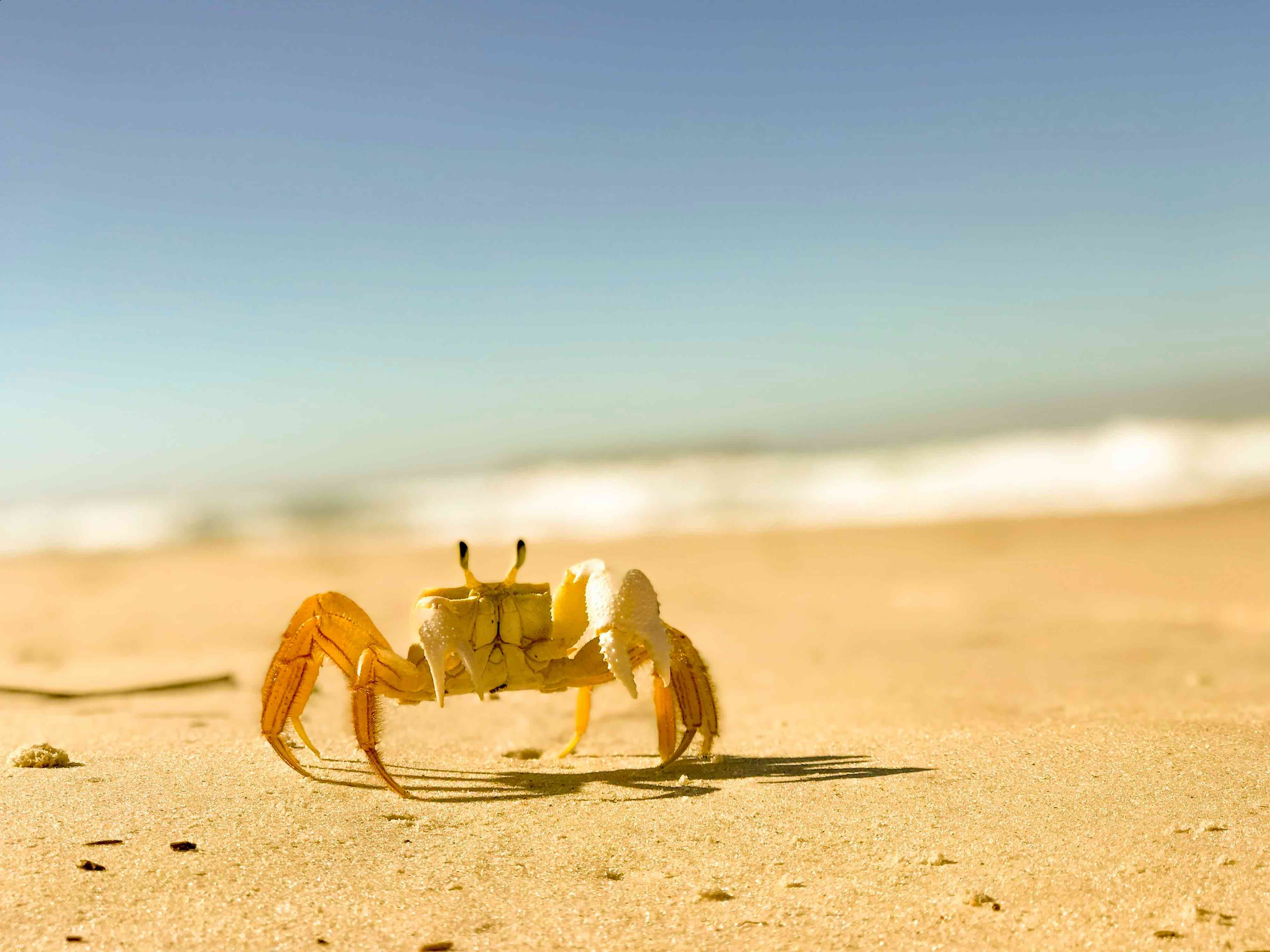
Hundreds of millions of years ago, some animals began to leave the aquatic environment and colonized dry land. Their transition marked a turning point in the history of life: it transformed terrestrial ecosystems and paved the way for the huge diversity of animal species we know today.
However, this leap out of the water did not happen just once; different lineages achieved it at different points in evolution. Although all faced similar challenges - such as desiccation, sun exposure, reproduction or sensory perception outside water -, it was not known whether these animals shared the same evolutionary mechanism to emerge from the aquatic environment onto dry land.
Now, a study led by the Institute of Evolutionary Biology (IBE), a joint centre of the Spanish National Research Council (CSIC) and Pompeu Fabra University (UPF), reveals that the conquest of dry land did not follow a single path. The work shows that different animal lineages independently and repeatedly found their own genetic solutions for living outside water. Published in Nature Communications, the study discovers that these species managed to respond to new environmental demands by reusing and modifying their genetic repertoires.
“Evolution did not follow a single genetic manual for setting foot on dry land”, explains Rosa Fernández, principal investigator at the IBE (CSIC-UPF) in the Metazoa Phylogenomics and Genome Evolution Lab and lead author of the study. “Each animal lineage reused the pieces it already had available in a different way and combined them in novel ways to face similar challenges”.
Tracing the genetic origin of terrestrial animal life
To carry out the study, the team analysed the genes involved in each species’ adaptation to life outside water. “The sea is a relatively stable environment, and leaving it entailed major physiological stress,” says Gemma Martínez, co-first author of the study and a former predoctoral researcher in Fernández’s group.
In total, they analysed more than 1,000 animal genomes. This extensive database made it possible to identify up to 15 independent events of terrestrialization - colonization of the land environment - over tens of millions of years.
The study, the most comprehensive conducted to date, has made it possible to reconstruct with great precision how terrestrial animal life emerged. The analysis revealed that, during this process, animals tended to lose genes, but not to incorporate new genetic material.
Genetic tinkering allowed animals to set foot on dry land
However, identifying genes gained or lost during evolution - as had been done in previous studies - is not enough to understand how these animals adapted to the new environment. To this end, the team carried out laboratory assays with extant species related to the protagonists of terrestrialization.
The experiments reproduced some of the challenges involved in the leap onto dry land, such as oxidation, desiccation, ultraviolet radiation, chemical gradients or food scarcity. “To perform a high-precision comparative analysis, we had to carry out hundreds of functional experiments that allowed us to identify which genes were activated in each species in response to environmental stress, and to determine whether they were unique to each species or shared by all”, adds Klara Eleftheriadi, co-first author of the study and a former predoctoral researcher in Fernández’s group.

Photographic montage created using images from Wikimedia Commons. From left to right and top to bottom: horseshoe crab (public domain); marine nematode (CC0 1.0); flatworm (LiCheng Shih, CC BY 2.0); ribbon worm (Guido Bohne, CC BY-SA 2.0); earthworm (Rob Hille, CC BY-SA 3.0); velvet worm (Marshal Hedin, CC BY-SA 2.0); land snail (CC0 1.0). The original images were cropped and combined into a collage. Licenses available under: Creative Commons.
The analysis revealed that there was no common set of genes, shared by all phyla, that responded to the same stress situations. However, although each lineage used different gene combinations, these performed similar functions.
Overall, the findings suggest that ancestral species started from broad genetic redundancy and, progressively, lost the genes they no longer needed. “Behind the innovation that made the leap onto dry land possible, we find a process of genetic tinkering”, says Fernández. “Species shed what was dispensable and reused genes that were already part of their repertoire to perform new functions”.
A new look at the evolutionary history of animals
The study offers a new view of the animal colonization of dry land and points to the reuse of pre-existing genetic material as a key driver of evolutionary innovation.
“The results invite us to think of terrestrialization not only as a change of habitat, but as a profound functional reconfiguration of animal biology, based on the use of the pre-existing genetic repertoire and not on the creation of entirely new solutions”, notes Fernández.
This study would not have been possible without access to high-quality genomic sequences from all the species analyzed. As part of its research, Fernández’s team has contributed dozens of new genomes and transcriptomes to global open-access databases.
“It is essential to have genetic information that represents all animal diversity, in order to include all phyla in studies and prevent some groups from being underrepresented in genomic analyses,” adds Fernández, who is also involved in the European Reference Genome Atlas (ERGA). “Only by broadening our view to lesser-known species and lineages will we be able to discover key pieces of evolutionary history that we still do not know.”
Reference article:
Gemma I. Martínez-Redondo, Klara Eleftheriadi, Judit Salces-Ortiz, Nuria Escudero, Fernando Ángel Fernández-Álvarez, Belén Carbonetto, Carlos Vargas-Chávez, Raquel García-Vernet, Javier Palma-Guerrero, Libe Rentería, Iñaki Rojo, Cristina Chiva, Eduard Sabidó, Aureliano Bombarely y Rosa Fernández (2026). Convergent genomic trajectories shape adaptation to life on land across animal lineages. Nature Communications, DOI: 10.1038/s41467-026-75551-2