
Institut de Biologia Evolutiva - CSIC UPF
New study suggests fish gut microbe helps regulate ocean health
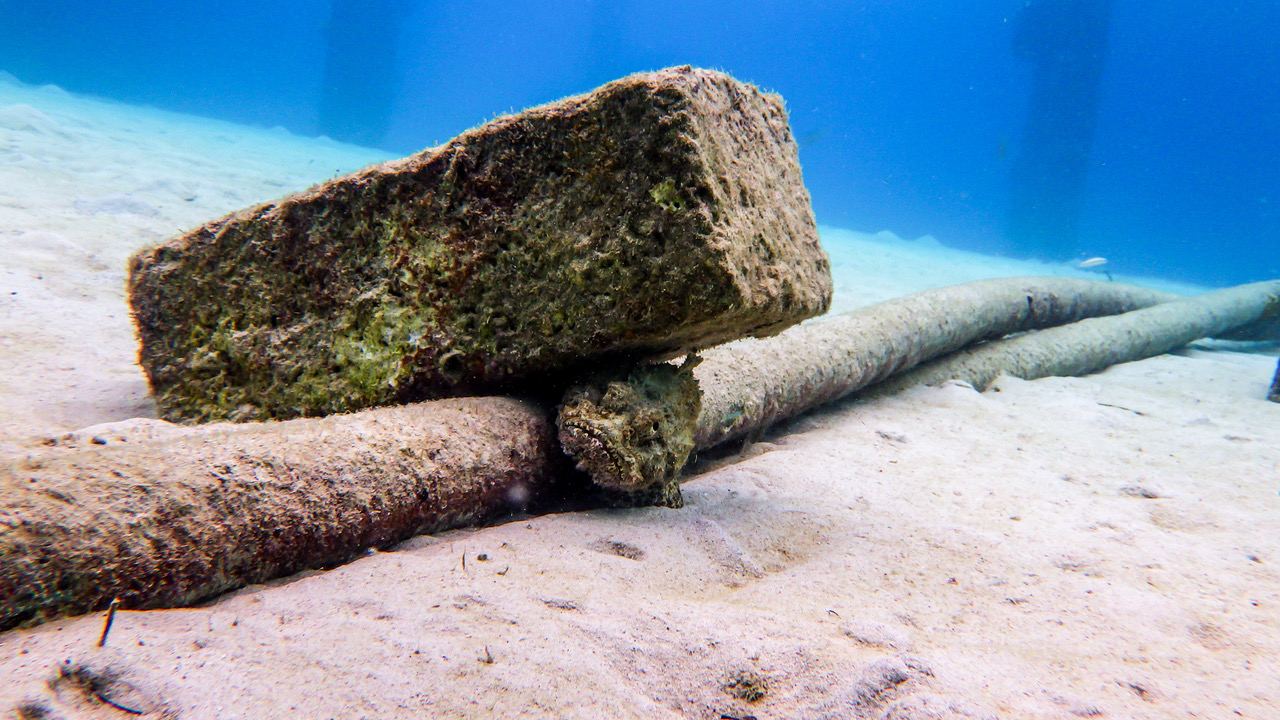
New research co-led by the Institute of Evolutionary Biology (IBE), a joint centre of the Spanish National Research Council (CSIC) and the Pompeu Fabra University (UPF), and the Rosenstiel School of Marine, Atmospheric, and Earth Science of the University of Miami reveals a potential link between the gut microbes of a fish and global ocean processes, offering new insight into how marine ecosystems help regulate ocean chemistry and the marine carbon cycle.
The study, led by former graduate student Anthony Bonacolta in the Department of Marine Biology and Ecology at the University of Miami Rosenstiel School of Marine, Atmospheric, and Earth Science, and a former student at the Institute of Evolutionary Biology, found that symbiotic gut microbes may work in tandem with marine fish to produce a form of calcium carbonate that influences overall ocean health and serves as a key carbon sink. This process, long attributed primarily to fish physiology, may in fact depend on a previously unrecognized microbial partnership.
Bony fish, called teleosts, drink seawater to stay hydrated. Inside their intestines, they process excess calcium and carbonate ions and excrete them as solid pellets of calcium carbonate called ichthyocarbonates.
"Just as we know that unicellular algae in the oceans represent one of the planet's main carbon sinks, we now know that symbiotic bacteria in fish are also one of the main contributors to the removal of carbon to the ocean floor, thus contributing to the modulation of global warming," says Javier del Campo, principal investigator at the IBE (CSIC-UPF).
To conduct the lab experiment, the researchers exposed Gulf toadfish to different salinity levels—brackish (9 ppt), seawater (35 ppt), and hypersaline (60 ppt)—to test how changes in salinity affect ichthyocarbonate formation, which is known to increase as part of the fish’s normal osmoregulation process. Fish kept in low salinity did not produce ichthyocarbonates, while those in seawater and more so in high salinity did.
Samples were collected from different sections of the intestine, from the ichthyocarbonates themselves, and from surrounding water. DNA and RNA were extracted to study both the gut microbiome and gene expression in fish and associated microbes. Microbial communities were characterized using genetic sequencing, and gene expression analyses were used to identify potential roles in carbonate formation.
They found that vibrios, particularly Photobacterium damselae subsp. damselae—were highly abundant in both the gut and associated ichthyocarbonates. These bacteria showed genetic potential for processes linked to ichthyocarbonate production, suggesting they may contribute to mineral formation alongside the fish host.
"We knew that the precipitation of calcium carbonate to form coral skeletons was the result of a symbiosis between an animal and a microorganism; we can now add a new symbiosis between microorganisms and animals to the calcium carbonate cycle of the oceans," adds del Campo, also an associate professor at the Rosenstiel School of Marine and Atmospheric Science at the University of Miami.
The research was supported by start-up funds from the University of Miami by Project PID2023-152522NB-I00 financed by the Ministry of Science, Innovation, and Universities in Spain.
Referenced article:
Bonacolta AM, Kravitz T, Mozo R, Baker LJ, Heuer RM, Grosell M, et al. (2026) Symbiotic bacteria may support calcium carbonate precipitation in the Gulf toadfish. PLoS Biol 24(5): e3003764. https://doi.org/10.1371/journal.pbio.3003764