
A rapid evolutionary process provides Sudanese Copts with resistance to malaria
A rapid evolutionary process provides Sudanese Copts with resistance to malaria
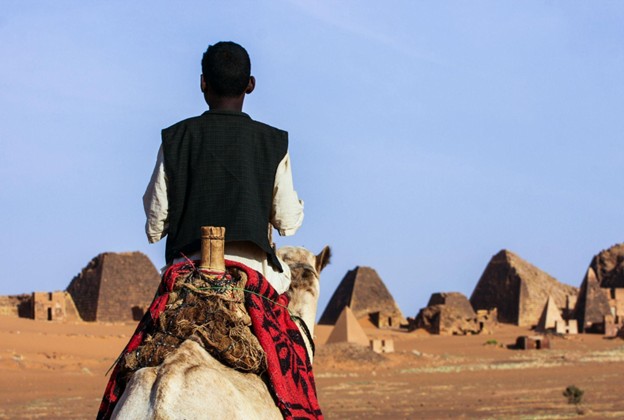
An international study led by the Institute of Evolutionary Biology (IBE), a joint research center of the Spanish National Research Council (CSIC) and Pompeu Fabra University (UPF), investigating the genomic diversity of the Sudanese population reveals that the Copts originating in Egypt –who settled in the country between the seventh and eleventh centuries– have acquired a genetic variant that protects them from contracting malaria.
“The acquisition of this variant has taken place very quickly, in just 1,500 years, after a group of Copts mixed with Sudanese populations with sub-Saharan characteristics”, explains David Comas, principal investigator at the Institute of Evolutionary Biology (IBE: CSIC-Pompeu Fabra University) and a full professor and researcher at the UPF Department of Medicine and Life Sciences, who has led the research. The study of 125 high-coverage genomes representing five of the country’s ethnolinguistic groups has enabled describing more than a million novel genetic variants, 1,500 of which could have implications for diseases.
Sudan sits at the crossroads between Africa and the Middle East, with a rich cultural, linguistic and ecological diversity shaped by a complex demographic history. “It is an eminently arid territory, traversed by the Nile from top to bottom, which has favoured the movement of populations and made it a rich country from the cultural, linguistic, social and religious points of view”, explains Laura Vilà Valls, first author of the study. According to researchers, it links the north and south of the continent and, historically, highly diverse populations have been found there. Thus “Sudan has a large representation of populations –up to 600 ethnic groups speaking some 400 languages and dialects– and is an example of the enormous genetic variability that exists in Africa”, says Comas.
Acquiring a genetic variant in record time
Between the seventh and eleventh centuries of the common era, coinciding with the Christian period of Nubia, some Copts originating in Egypt with a genome of similar characteristics to those of the populations of the Middle East, migrated to Sudan, where they mixed with sub-Saharan African populations.
The study published in PNAS establishes that after mixing with Sudanese populations, the Copts acquired the Duffy-null genotype typical of sub-Saharan populations, which hinders malaria infection. This variant prevents Plasmodium vivax, the protozoan that causes the disease, from infecting red blood cells.
“The fact that the Copts mixed with sub-Saharan populations in a region where there are mosquitoes that act as vectors of malaria transmission made the Duffy-null variant highly beneficial to the Coptic population”, Laura Vilà Valls explains.
“About 1,500 years after mixing, we would expect to find the Duffy-null variant in some individuals. But detecting such a high frequency of this variant, up to six times more than expected, shows that after mixing, an adaptation took place: an evolutionary pressure that has sped up the process of change”, David Comas points out. In this case, it was malaria that exerted a strong selective pressure leading the Copts who had this variant to enjoy benefits. This is why the frequency of the variant increased very quickly. According to the full professor, “in evolutionary terms, 1,500 years is a very short time”.
“We have the idea that evolution is a very slow process, but if the selective pressure is strong, the change can be very quick”, says Comas.
Although it is not the first time that the acquisition of the Duffy-null variant has been described after population mixing in regions where malaria is transmitted –it had already been recorded in Cape Verde, Pakistan and Madagascar– this is the first time an adaptation has been described in regions that are so close and within the same continent.
More than a million novel variants
The study analysed the genomes of 125 blood samples from Sudanese individuals from five ethnolinguistic populations that include the Fur and the Mahas, two populations that inhabit the west and the north of the country, respectively, and who speak languages of Nilo-Saharan origin; the Beja: nomadic herders from the east of the desert who speak languages of Afro-Asiatic origin like the Copts, who come from Egypt, and the Fula: a nomadic population that inhabits the Sahel and who speak Niger-Congolese.
By comparing these genomes with references from different databases, the authors have identified 1.1 million novel genetic variants –changes in the genome– that had not been described until now. By conducting bioinformatic analyses, the authors have predicted their functional involvement and estimate that 1,500 of these new variants could have implications for diseases.
“All these data help to describe a little better the immense genetic diversity of the African continent and render it more broadly represented in reference databases”, Vilà Valls notes.
Africa is the continent with the greatest genetic diversity. “Our species originated in Africa more than 200,000 years ago, and it was only 50,000 years ago that our ancestors began to colonize the rest of the world”, David Comas explains. He concludes: “everything we see outside Africa is a subset of the genetic diversity that exists on the African continent”.
Reference article:
L. Vilà-Valls, J. Garcia-Calleja, J. Prado-Martinez, E. Bosch, A.M. Andrés, M.G. Netea, D. Comas, & H.Y. Hassan, Sudan’s complex genetic admixture history drives adaptation to malaria in Sudanese Copts, Proc. Natl. Acad. Sci. U.S.A. 123 (3) e2516263123, https://doi.org/10.1073/pnas.2516263123 (2026).